


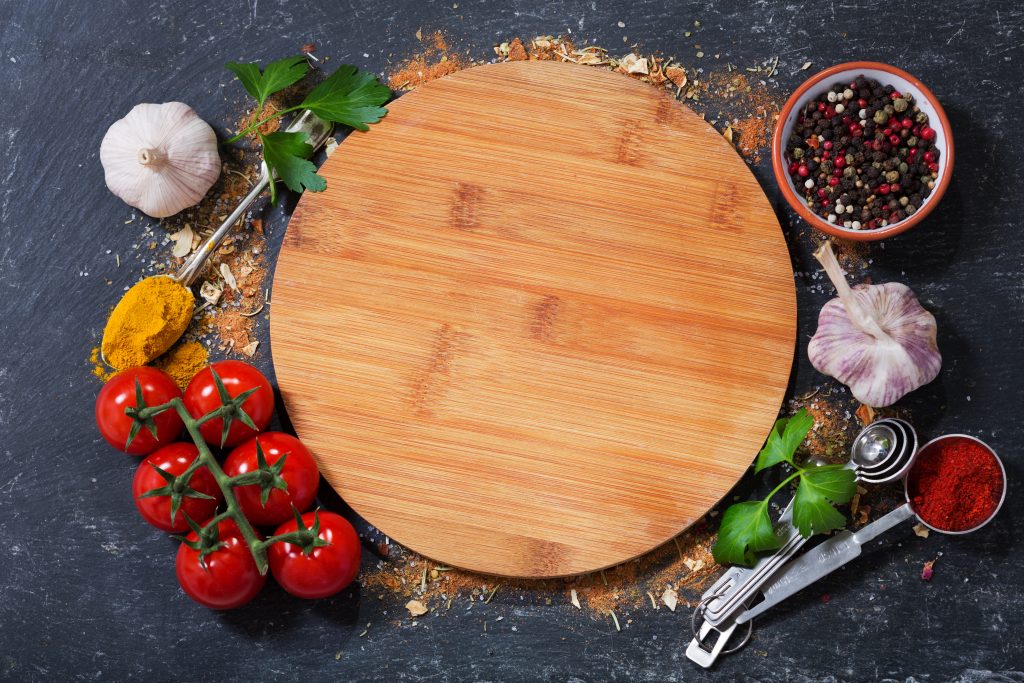
Have you ever wondered what happens to the plastic when knife marks appear on your cutting board? The answer is alarming: that plastic doesn’t just disappear. It goes directly into your body.
In 2024, awareness of healthy cooking is reaching a new level. It’s time to look at the facts and understand why eco-friendly kitchen utensils made of natural wood are the only right choice for the health of you and your family.
Shocking Research: Are You Eating a “Credit Card” Every Year?
Recent scientific studies (such as those published in Environmental Science & Technology) shed new light on the use of synthetic cutting boards.
-
Microplastics in every bite: It is estimated that people using plastic boards may unknowingly consume anywhere from a dozen to several dozen grams of plastic per year. That’s like eating a plastic credit card once a year.
-
The degradation process: With every knife stroke, the plastic surface suffers micro-damage. The resulting microplastic particles cling to vegetables, meat, and bread, transferring directly to your plate.
Not Just Boards – Toxic Plastic Accessories
The problem doesn’t stop at boards. Other plastic kitchen accessories, though seemingly practical, carry serious risks:
-
Chemical leaching under heat: Plastic spatulas or spoons in contact with a hot pan can release harmful compounds, such as bisphenols (BPA) or phthalates, which disrupt the endocrine system.
-
Melting edges: Even if you can’t see it with the naked eye, the edges of plastic utensils oxidize and “wear off” while stirring food, mixing into your meal.
Natural Wood – A Safe and Healthy Alternative
By choosing natural wood utensils from EFO, you completely eliminate the risk of consuming synthetic polymers. Our products represent a return to nature at its best.
Why is natural wood better?
-
No toxic particles: Even if a knife leaves a mark on a wooden surface, only a tiny particle of natural cellulose can get into the food. This is an organic material, completely inert to the human body and safe to ingest.
-
Natural antibacterial protection: Wood has a unique ability to neutralize microbes. Bacteria such as Salmonella or E. coli die off on wooden surfaces much faster than on plastic, where deep cuts provide ideal conditions for growth.
-
Proper protection: At EFO, we ensure our products are properly protected using natural methods. This ensures the wood doesn’t absorb odors, remains moisture-resistant, and stays smooth for years, while being 100% food-safe.
Your Plastic-Free Kitchen – Choose Health
Switching to an eco-kitchen is not just a trend – it’s an investment in the purity of your meals. By choosing natural accessories, you gain:
-
Composition certainty: No BPA, microplastics, or toxic dyes.
-
Durability: Wood is extremely resilient and, unlike plastic, doesn’t end up in the trash after a few months.
-
Cookware safety: Natural wood is gentle on your pots and pans, preventing scratches.
Build your first eco-utensil set with our bestseller list! Take care of hygiene and health in your home. Swap harmful plastic for properly protected natural wood that will serve generations. [Check out EFO bestsellers and choose a healthy kitchen!]